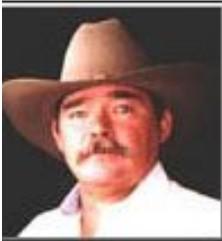
DEA Administrator Asa Hutchinson debates New Mexico Governor Gary Johnson at Yale University, November 15, 2001

Asa Hutchinson                                                Gary Johnson

Debate sponsored by the Yale Federalist Society.  Video of debate (RealPlayer format)   

Yale Daily News article  

Introduction

Welcome to the Federalist Society at the Yale Law School, my name is Michael Shumsky, I'm the Vice President for Operations. Before we begin tonight's debate I'd like to thank a couple of people and institutions who've been integral in helping us put this together tonight.

Obviously the administration of the Yale Law School and in particular Dean Thompson  who has been integral in getting this set up. We'd also like to thank the Yale Police Department, the New Haven Police Department, and the National Federalist Society for making the event possible. And of course I'd like to thank both the Governor and the Administrator and their staffs for their efforts in helping us plan this debate and put it on tonight.

Tonight's debate brings together two of the most influential participants in our nation's dialogue over the past, present and future of the war on drugs.

After graduating from law school at the University of Arkansas, Asa Hutchinson practiced law in rural Arkansas for 21 years before being elected to Congress in 1995. During his time as a lawyer, President Reagan appointed him to serve as the U.S. attorney for the western district of Arkansas, making him at age 31 the youngest U.S. attorney in the nation. During his tenure in private practice and his career as a U.S. A.[Attorney] Mr. Hutchinson personally tried over 100 cases ranging from cocaine distribution to securities fraud to murder. As a member of Congress, Mr. Hutchinson served on the House Judiciary Committee as well as the Select Committee on Intelligence and he was an active participant on the House Speaker's Task Force for a Drug-Free America. He also served as a house manager in the impeachment trial of former President Clinton during which, according to the highly respected National Journal, he "struck a positive, open-minded, even friendly tone that was sharply in contrast with much of the discourse on the issue." On August 8, 2001, then Representative Hutchinson became the Administrator of the Federal Drug Enforcement Administration following a 98-to-1 confirmation vote in the United States Senate.

Governor Gary Johnson is the first governor of New Mexico to be elected to two consecutive four-year terms in office. After putting himself through the University of New Mexico by working in construction, Governor Johnson and his wife Dee founded Big J Enterprises, a successful commercial and industrial construction company still operating today in New Mexico. At age 40, Governor Johnson turned to politics becoming the 26th Governor of New Mexico in 1994. Five years later, and shortly into his second term in office, Johnson made national headlines by calling for an overhaul of the nation's war on drugs and suggesting that marijuana should be legalized, a position that put him, in the tradition of another well known southwestern Republican, firmly outside the GOP mainstream. Since then he has become a forceful public advocate for reform.

Before we get started, a quick note on the format of tonight's debate. Each speaker will begin with a 12-minute opening statement, which will be followed by 8 minutes for rebuttal, a period that each of these speakers will use. At the end of the debate the speakers have agreed to field questions from the audience for approximately 20 minutes. You'll notice that there are two microphones, one in each of these aisles, and I'd ask everybody to please wait before the speakers have concluded all of their remarks before lining up. Because Governor Johnson and Administrator Hutchinson will be available to the press after the conclusion of the question period, I'd also ask that students be given first access to the microphones now. With that let's get started, and Governor Johnson will speak first.

Governor Johnson's opening statement.

A little bit more about myself, my wife Dee is here in the front row, Dee has been incredibly supportive through all of this. Thank you. We have two great kids, I have a son Eric, who is a sophomore this year at the University of Denver, we have a daughter Saya (sp?) who graduated this last spring at the University of Colorado Boulder, and Saya had the distinction of graduating number one in her class out of 2600 students in arts and sciences, our daughter was number one, something we're very proud of.

I started a business in 1974 as a one person handyman, soon to be joined by Dee, the two of us, that was in 1974... in 1994 we had a thousand people employed: electrical, mechanical, plumbing, pipe-fitting, the American dream come true. Work hard, show up on time, do a little bit more for people that what you say you're going to do for them and you can be successful and I'm living proof of that.

I'm also an athlete; you'd be very hard pressed to find anyone in better physical condition at age 48 than I am. I've competed in the Iron Man Triathlon twice in Hawaii, as governor, and finished with the sun still shining, and by that I mean I had a pretty good time. I aspire to be a world champion in the triathlon out of office, easy said, another thing to do it... but we've got to have our goals. I also have a goal to climb Mount Everest getting out of office.

I've never been involved in politics before, this is my first elective office. I've always thought it to be a high calling, never been involved in politics before, my promise was: New Mexicans, I'm a business person, I'm going to put the issues that should be on the front burner on the front burner regardless of the political consequences. I want to say I was very successful the first year in doing just that, I got reelected, and now I would like to talk about what I consider to be the biggest head-in-the-sand issue that is with us today, and that is our war on drugs.

I think the war on drugs is an absolute miserable failure. And I get this question all the time: why drugs governor, when there are so many other important issues facing us? I don't know if there are any more important issues that are facing us. When you consider that 50% of what we spend on law enforcement, 50% of what we spend on the courts and 50% of what we spend on the prisons is drug-related I don't know if there's a biggest subject facing us today. When you consider the ultimate irony, that the events of September 11th may have been financed because we had an Al Capone/Osama bin Laden getting his funding from drugs, I mean, again this may be the ultimate irony.

If you leave here today with one message that I have regarding drugs, it's don't do drugs, all right? Don't do drugs. I would also ask you not to do alcohol. You're looking at somebody who hasn't had a drink in 15 years and I gotta tell you it's the best decision I ever made in my whole life, and for any of you out there who smoke cigarettes, tobacco, I tell you what, there's nothing redeeming at all regarding tobacco.

But is anyone giving a positive message in this country when it comes to drugs... anyone? I don't think so. And yet 80,000,000 Americans have done illegal drugs, all right? 54% of the graduating class of the year 2000, high school students, did illegal drugs. Seems to me that the message we're sending isn't having too much of an effect.

I was shocked to find out the following death statistics:

Tobacco... it's estimated that 450,000 people died last year as the result of tobacco.

It's estimated that 110,000 people died last year from alcohol, and I'm not talking about drinking and driving now, I'm talking about the health consequence of doing alcohol.

100,000 were estimated to have died last year from legal prescription drugs.

I was shocked to find out that only 10,000 people died from heroin and cocaine.

And it probably doesn't surprise you at all, but there are no known deaths as the result of marijuana, and yet I'm sure there have been a few who have smoked themselves to death.

Now the criticism is, is that look, it's the result of our policies that there are so few deaths from heroin and cocaine. Look, deaths are caused by prohibition... uncontrolled substances you don't know what the substances are you don't the quality, quantity... as a result of that you have people die. I think you can make a real case that if you were to control these substances that you might have fewer deaths, in regard to these substances.

Even though obviously tobacco is the worst substance, and alcohol is next worse, and legal prescription drugs, followed by cocaine and heroin, we are arresting 1.6 million people a year in this country! This is staggering! This is the equivalent population of New Mexico! 800,000 of those arrests and a record last year, 770,000 arrests for marijuana in this country. Half those marijuana arrests are among Hispanics! I ask you this, are half the users of marijuana in this country Hispanic? No way! Point being, these laws are terribly discriminatory. If you are of color, there is a seven times more likelihood that you will go to prison if you have been arrested [for] drug related crime.

What do we need to do?

I think that we need to legalize marijuana. I think that we need to adopt harm-reduction strategies on all these other drugs. We need to recognize that drug problems are a health problem, not a criminal justice problem. And when I say legal, it's never going to be legal to smoke marijuana or do any other drugs and do harm to somebody else... never going to be legal, that ought to be the line of distinction. Never going to be legal for kids to do drugs, to smoke marijuana, or to sell marijuana to kids or any other drugs to kids, all right? New line of distinction, like alcohol.

Alcohol, you have a few drinks, that's OK. You have many drinks and get into an automobile though, that's not OK; you just crossed over the line. You might put somebody else in harm's way, you might do harm to somebody else. That ought to be the line of distinction.

When I entered into this, I thought that Holland had an incredibly high crime rate and high drug usage rates. I was shocked to find out that Holland has half... half the drug use as that of the United States... that's among kids and adults, and that's for marijuana and [for] harder drugs they have about a third the use rate... that's among adults and children. They have a tenth of the incarceration rate, they have a fifth the homicide rate as that of the United States, so if you were to look at any country in the world that has effectively decriminalized drug use it would suggest that there might not be a better way. And when I talk about harm reduction strategies, all right, strategies to reduce... what is it we really want to do, what we really want to do is reduce death, disease and crime, isn't that what we want to do? So there are some strategies that do that. Needle exchange for example saves lives, no more Hepatitis C, no more HIV. Being able to sell needles through a pharmacy, doesn't increase use but it reduces HIV and Hepatitis C.

Switzerland has a heroin maintenance program, all right? In Zurich, Switzerland if you are a heroin addict you can get free heroin. You have to go to a doctor, doctor prescribes the heroin, you go to a clinic, you get your dose of heroin, you ingest the heroin with clean needles. The idea was, we'll reduce death, disease and crime. Don't take my word for it, all right? I'm talking to the chief of police from Zurich who was in Albuquerque a year ago. He said we in law enforcement could not have been more opposed to what there were proposing to do in Zurich because death, disease and crime was going to skyrocket.

Again, no more crime because the heroin is free. Needles are clean so no more HIV, no more Hepatitis C. No more death from overdose because the product is prescribed. He said we could not have been more opposed, he said, I am here today to tell you that Zurich is a much better place to live today, that this has surpassed everyone's wildest expectations, that death, disease and crime have plummeted in Zurich. This is a harm reduction strategy, is that not better than what we're currently doing today? European countries are ahead of us with regards to drug reform. Recently, Great Britain has decided to no longer enforce possession or sale of marijuana. They're going to concentrate on harder drugs. They will enforce marijuana sale and use if it's in conjunction with harder drugs. So there is movement in this country.

I think we need to understand that drug prohibition is what is killing us, and not use. And that is not to discount use as being a problem. I think that we've got to say 'know' to drugs, and I don't mean N - O, but K - N - O - W. So what you're going to hear this evening are going to be some conflicting statistics, if you will. I think it's incumbent on all of you, rather than to go away and say, gee I believe this, or I believe that, I think it's incumbent on everyone here to go away and actually find out what the statistics are. And when you do that, I think the argument becomes compelling. We can do better in this area of drug reform, the goals ought to be to reduce death, disease, crime... spend more of our resources on education; spend more of our resources on treatment, for those that want it.

Thank you very much.

Administrator Hutchinson's opening statement.

Thank you for that welcome. Governor Johnson, greetings to you. Thank you for your participation in this debate. I want to thank the Yale Law School for hosting it, particularly the Yale Law School Federal Society and for the invitation that you've extended to me. I appreciate each of the students that are here and members of the community to come and hear this important discussion.

I think from listening to Governor Johnson and from what we know about the drug battles that we face in our society, this is not a problem that demands a quick fix solution. We'd like to have that, but there's not one out there. We all would like to see a panacea and we'd like to see something that we say would solve this problem for society, but that's not the nature of entrenched social problems.

We have been engaging in our anti-drug efforts in this country not for twenty years, but for a hundred and twenty years, and this forum that is being presented is an important opportunity for us to engage in this debate.

Let me start by asking you the question. How many of you believe that marijuana should be legalized? (pause) I just wanted to see what my burden of proof was tonight. I also wanted to make sure these DEA agents didn't raise their hand up here on the front row.

I have seen the drug problems, as a prosecutor - that was mentioned. I've also been a parent that have raised four teenagers. Anytime you've been a parent - and I would suspect that just about everybody in this room has had some family member that has struggled with this particular issue. So it becomes very personal. It becomes very real, and so for that reason I think it is important to engage in a debate.

This year I was starting my third term in the United States Congress. President Bush called and asked me to leave Congress and head up the Drug Enforcement Administration. That was an unusual call - one I didn't expect, but one that I ultimately said yes to. I said yes because it was the President that called. But I also said yes because I believe in the importance of this issue to our nation and I believe that our nation should resist drug use as a path to our future.

Governor Johnson has been very consistent in his statements that he believes that marijuana and other drugs are handicaps. That's why he admonished everyone here, "Don't do drugs." He understands that they are handicaps - that they are harmful. The issue is, what are we going to do about those harmful set of drugs? Now I believe the issue is, what kind of future do we want for the next generation?

Do we want a future in which the productivity of our nation is handicapped, our educational system is handicapped, and our service to others is handicapped by drug dependency? Drug dependency that weakens individuals, destroys communities and shatters families. If we as a nation want to discourage drug use that harms not just individuals, but our society as a whole, - how do we do it?

Well, I believe that we first of all do it by the law. By the law saying that it is wrong because it is harmful. And our laws reflect the values of our society. The law is the master teacher, and guides each generation as to what is acceptable conduct in the community. And our laws that reflect our values have to be enforced.

I'm proud of the Drug Enforcement Administration and the police officers across this country that risk their lives in order to enforce our laws. I'm a part of that. We enforce the laws. But beyond those guiding principles established by the law that it ought to be criminal conduct, we should have an ongoing debate as to how we can do better in our country on drug policy. Is there a better way to discourage drug abuse?

And yes, we ought to talk about education - what more we can do on the prevention side. We ought to talk about treatment and how we can close the gap, so that there’s more facilities available for those that need treatment. We need to encourage the development of drug courts. New Haven has a mentor drug court established by Judge Simone (sp?). An excellent example of what works and a new idea that's working in our fight against drugs.

We ought to reexamine the present ban on student loans to those convicted of drug offenses, where it is no matter when the offense occurred. This needs to be changed to only deal with current drug use or current convictions. So we need to debate that.

We ought to debate racial disparity in policing and sentencing policies. Those are fair debates for our drug policies. These are essential points of any debate, but we should recognize that drug legalization would be a social catastrophe for our country.

The legalizers present three basic arguments which support their concept of legalization. First of all, individual freedom demands it, the drug war has been a failure, and legalization, thirdly, would somehow reduce the cost of enforcement and incarceration.

Let's look at these, and I challenge you great law students, and students from Yale University to look beyond the easy statements that are made and the rhetoric.

First of all, in terms of freedom. If you support seat belt laws - How many of you all believe in seat belt laws? (pause) About the same number that supported the legalization of marijuana. Well if you support seat belt laws, drug laws should not be any problem for you. The Federalist Society, in it's brochure says that it is committed to the principles that the state exists to preserve freedom.  I applaud that. And I would add the state should not just protect individual freedom, but collective freedom as well.

Drug use harms the family, the community, as well as the individual.

But it also, ladies and gentlemen, endangers our democracy. The essence of our democracy is what? - That freedom is maintained through individual participation, individual sacrifice and common values. And it is the drug culture that erodes and ultimately destroys everything that is necessary for democracy to work.

When one is overtaken with drugs, he is not thinking about what he can do for others, for the community, for family, for our common values. He is simply trying to get the next fix on drugs. And so we give up freedom when we addict ourselves to drugs and this fact is not lost on the terrorists. They understand that drug use erodes the Western Civilization values and they certainly do not hesitate to send it in our direction. Our common freedoms and our cherished democracy cannot survive in a culture of drug use and so this is important for our nation's future.

Secondly, they say, "Well, we're losing the War On Drugs."

We're not losing it when we talk about Jennifer Maloy (sp?), of Youngstown, Ohio, who graduated after a year from a drug court. I was there. She was convicted of breaking and entering. She had a cocaine addiction problem. Instead of going to prison, she opted for treatment, through a drug court that worked hard for her with accountability, and after that time, she graduated and in the graduation ceremony, she hugged the judge. And then she turned to the arresting officer and said, "Sir, thank you for arresting me and saving my life." And so to her it's a victory. It is not a losing battle.

And yes, drug use in the last fifteen years has been reduced, over a half. Cocaine use by 75 percent. Those are just statistics, but perhaps it is one of your family members that is part of those victories and we should not judge this social problem differently than other social problems. We are making a difference in this effort.

The third argument that is presented - that legalization would put the cartels and the drug dealers out of business. It would help us economically. Nonsense! If you legalize marijuana, and listen to this and every argument that Governor Johnson presents. If you legalize marijuana, which is his position, will that put the dealers out of business? Of course it won't, because they have cocaine, they have methamphetamines, they have heroin, they have ecstasy - there's a whole host of them. And so if you broaden it and say, "Let's legalize heroin also, or cocaine," then you've still got methamphetamine. You've still got ecstasy. And if you legalize everything, they're still going to offer you a better way. There's always going to be the black market. There's always going to be the criminal organizations that are out there.

Does legalization reduce enforcement costs? Not as long as there is cocaine, methamphetamine, heroin, ecstasy or LSD of a higher purity. And so that is not going to solve it. It's not going to reduce the cost. It's not going to reduce the prison. Our enforcement efforts will still be there.

Finally, we need to learn from history. A hundred and twenty years ago, drugs were legal in this country. Yes, our nation has tried legalization. Heroin and cocaine were legal and plentiful. What was the result? Addiction and crime problems at an unprecedented level. In 1880, there were over 400,000 heroin/opium addicts in our nation. That's twice as many per capita as there are today in the United States. And so we have tried legalization. And what did it lead to? It led to increased abuse and social cost.

There is no quick fix, ladies and gentlemen. History teaches us that a time of national emergency - and we have seen that since September 11 - In a time of national emergency, a nation's moral values are clarified. World War II was an example of that.

During World War II, after Pearl Harbor, it gave us the lowest level of drug use in our nation's history. Moral values were clarified. Responsibility was emphasized. And so it is my hope that your generation, your generation in this room, will lead this nation away from drug dependency and toward responsibility and a more secure freedom.

Thank you.

Governor Johnson's Rebuttal

Law is the master teacher, I guess that women with the right to vote should have never been allowed to vote, I guess that segregation should still exist in this country, that slavery should still exist in this country. We have the ability to change laws. Seat belt laws, look there’s a big difference between seat belt laws and drug laws.

It’s not criminal if you don’t buckle up. It’s a great law, 94% of the people comply with seat belt laws. What if they didn’t, what if only 40% of the people complied with seat belt laws? Would we criminalize seat belt behavior?

At what point would we change the seat belt laws if only 40% of the people complied with seat belt laws? When 50% of what we are spending on law enforcement, 50% of what we are spending on the courts and 50% of what we are spending on prisons was seat belt related? I would hope we would change the law!

I would hope we would change the law when the law enforcement officer (applause) .. I would hope we would change the law when the law enforcement officer pulled you over for not buckling up your seatbelt because of federal mandatory seat belt laws, this being your third time you are having to go away for 15 to 20 years because of not buckling up and an officer gets shot, I would hope we would change the seatbelt laws in this country.

Look, this is about a message to kids. The message to kids should be that we love our kids. I don’t want my kids in an overdose situation. I don’t want my kids in a situation where they are uncomfortable, where they have to drive. My message to my kids is that I love them first and foremost. You’re in a bad situation where you’re going to be position where you’re going to drive, or somebody else is going to drive, you give me a call I’ll come pick you up, no questions asked. Because I love you.

This is not… it’s about abuse, all right, the problem is the government measures our problem in use and not abuse. For a second here, what would happen if tomorrow in Connecticut if you read alcohol abuse went up 5% over the last year, what would you be thinking?

What you think is “Who Cares!”, you understand that alcohol use is cyclical. What you care about is, is DWI up or down, is violence associated with alcohol, domestic violence up or down? Is property crime associated with alcohol up or down? Why can’t we apply those same principles to drug use? Again, reducing death, disease and crime.

Look, productivity. We can drug test with regard to productivity. It’s something I support. We need a new set of laws to go along with reform. And that new set of laws should be to allow employers to discriminate. You can make a choice. You can be a dishwasher and smoke pot or you can be an astronaut. But being a dishwasher and smoking pot or smoking pot should not end you up in prison.

The idea should be to reduce death, disease, crime, corruption. Spend more of our resources on education. Spend more of our resources on treatment.

The government assumes. The government assumes that everybody that does drugs, anybody that smokes marijuana belongs in treatment. That is an assumption that the government has and it’s just not true. For the most part people who do drugs choose when and where to do drugs. And I’m not condoning drug use here, at all.

But for the most part people who do drugs, choose when and where to do those drugs. And they do no harm arguably to no one but themselves. Should that be criminal? I’m just saying that has got to stop being criminal.

Talk about a balanced approach. You talk about more money into education. The Drug Enforcement Administration, yet 3% of their budget goes to education. This is still about arresting and locking up. We’ve got to eliminate mandatory minimum sentencing. We are letting violent criminals out of jail to make room for non-violent drug felons.

I’m glad that Asa talked about re-examining student loans. That’s terrific. I didn’t realize this, but the government has a law. You will be denied a student loan if you have been convicted of a drug crime. You know when I first heard this I thought.. and this is the way it is now.. I thought, okay you break the law you pay the consequence and the consequence being not receiving a student loan.

But then, come to find out if you’re a student and you have committed rape, murder, armed robbery, burglary.. you’ll get your student loan. It’s just you wont get the loan if you had the marijuana pipe in your glove compartment, you will not get a student loan. I think that’s hypocrisy.  I think it’s hypocrisy.

I’ve been raised to believe that the worst thing an expectant mother can do is to use cocaine. That the worst thing that an expectant mother can do to her unborn is use cocaine. Whether that is powder cocaine or crack cocaine.

Don’t take my word for this.  The American Medical Association came out with a report in February. The report said, expectant mothers, don’t use cocaine. It’s terrible and it has a terrible consequence on your unborn. But guess what, the report goes on to say that it’s no worse of an effect than tobacco, it’s no worse of an effect than alcohol.

So they are saying don’t do any one of the three. Well which one of the three gets your baby taken away at birth? I read in the paper the other day that a mother delivering, a new born was born as a stillborn, and because of her cocaine use she was sentenced to twenty five years in jail. This is a terrible consequence.

But we don’t do that for stillborn babies of mothers who smoke, and I mean tobacco. We don’t do it to mothers who have children stillborn to them that are alcoholics. All three are terrible, but none is worse than the others. This is hypocrisy.

Drugs use has been cut in half. Listen we hear this all the time, this is an absolute insult to our intelligence, that since 1979 drug use has been cut in half by 11 million drug users? During that same amount of time, we’ve arrested 20 million people. No, come on! As we move down using this equation, as we move down to a few thousand users in this country we’re going to be arresting 6 million people a year in this country. I am going to live to see 80 million drug arrests in this country in my lifetime if we continue at the present rate.

Overdose is a function of prohibition. We had 28 individuals arrested in Northern New Mexico for trafficking heroin. Our prediction was that overdose that weekend was going to skyrocket because addicts were not going to do without their heroin. It was just going to be new heroin, different quality, different quantity and that’s exactly what happened that weekend.

Prohibition is killing us. Not the actual use. And that is not to discount the problems with use. Drug courts don’t work, all right? As an alternative to going to prison I would like to offer the drug court alternative in 100 out of 100 cases. Want to go to prison? Want to go to drug court? I hope we have the drug court alternative. Does it reduce use, eliminate use? Absolutely not! It does not work.

Marijuana is not a gateway drug. If there is one thing you can argue about marijuana should not be decriminalized or legalized but not on the basis of gateway. Out of 105 marijuana users, one goes on to use cocaine on a fairly regular basis. Again it is incumbent on everyone here to listen to these facts and go out and determine for your self what the facts are.

You may hear facts regarding Holland and the US, what you have is high crime rate, high use rate in the US. Low crime rate, low use rate in Holland. And you’ll have aberrations in the two. Keep in mind, here are the two trend lines. All right. (Holds one hand at chest level, one at eye level)

And again the ultimate irony, the ultimate irony that September 11th the facts that are, the circumstance we find ourselves today as a country may in fact be the result of the illegal drug trade and the ability to do what individuals have done to the United States.

Thank you.

Administrator Hutchinson's Rebuttal

Thank you again Governor Johnson for your comments. Let me address just a few of the things that were raised during his rebuttal. One thing that Governor Johnson indicated in his early comments, his first presentation was that 54% of the 2000 graduating class has done illegal drugs. That got a good reaction from the audience, but what in fact does that mean?

When you look at illegal drugs for someone who is under 21 or 18, you can’t smoke, you can’t use alcohol, so the 54% are those, anyone who has used alcohol, cigarettes or any other hard drug. It is not a starling statistic at all. I think the greater question is, his point was that the message is not having too much effect. I think the greater question is what would the statistics be like if you went to a legalization scenario for our young people? Would they be more inclined to use marijuana? Would they be more inclined to use drugs if the adult population was able to use it in a legal context? I think that is the issue. And the fact is that history tells us that you if go to a legalize context that drug use increases.

And that is the difficulty that you find whenever Governor Johnson concedes that it’s harmful and you should not use drugs, how do you accomplish that societal goal? And he argues that we need to be able to reduce usage, but he make the point that the government spends too much time measuring use and not concentrating on abuse. Well the reason use is measured, is because use, use to our young people is harmful.

And that is what is the concern and we want those statistics to be able to go down. Obviously we put our enforcement efforts on those traffickers that are engaged in selling to our youth. He makes the point in his presentation that we’re incarcerating marijuana users. Let me emphasize the point that at the federal level, 95% of all drug convictions are for trafficking, not for any possession. But if you look at the state system as well. So what, let’s look at what statistics mean.

Yes there are 1.6 million people arrested every year in the United States. 800,000 of those arrests are for marijuana. But in fact there are only 7,000 inmates in either state or federal prison whose most serious conviction was a marijuana possession charge. Only seven thousand.

And so what does that mean? That means that someone might be pleading to armed robbery but they had marijuana in the car and they also pled to possession of marijuana. But it means that only 7 thousand are in prison for simple possession of marijuana where that is the most serious charge. And so I don’t think that you can make the case that in the United States we’re incarcerating marijuana users because that is not the fact.

Governor Johnson spent some time looking at the European experiment. And I don’t think we’ve had any great disagreement in the facts except that you mocked one of my facts that I’ll come back to in a moment about drug use declining by one half. We have a dispute of the facts beyond that. The European experiment, I’ll just point that it’s an unsettled verdict in Europe, in the Netherlands. I think that they are very concerned about the MDMA, the ecstasy chemists coming in there and using the Netherlands to export almost 90% of the ecstasy that we get in the United States. There’s a concern there.

And if you look toward Great Britain, in 1964 they did go to the harm reduction scenario for heroin. They said we’re going to issue heroin to heroin addicts, to wean them off of it. When they saw their heroin use increase by 100% they stopped the experiment. And so I think that you can see that Europe even in themselves, we don’t know exactly the direction they will be going.

I think the United States needs to provide some leadership in the other direction. Now let me come back to the statistics that Governor Johnson treated very lightly. He mocked the fact that I pointed out that drug use has been decreased in the last 15 years. Drug use has declined by one half overall. Cocaine use by 75%. Now he looks at this audience and says “you know that’s not true.” Well, relying upon your experience perhaps.

Well I encourage you to look at the statistic. He is not disputing my statistic other than an anecdote that he is gaining from this room. The statistics are real, they’re factual, they’re the ones he cites himself in other contexts. And I’m not trying to say drug use is a solved problem in society, we know better than that. But the fact is, we had a concentrated effort in the eighties, we made a decline. The problem is it has plateaued since 1992 and we’ve got to do something in our society to get it down to a lower level. But can make progress and we have proved that, whenever we have concentrated effort in our country.

One thing that we are doing in the Drug Enforcement Administration is trying to coordinate our enforcement efforts with what we’re doing in our communities to reduce the demand, to develop the community coalition, to have the most lasting impact. Leverage our enforcement effort with the community that will say we want to invest in more treatment; we want to invest in the drug courts.

We want to make sure that there is adequate counseling and education in school systems. And then when we come in with an enforcement team, and we dismantle that drug organization, then we in the DEA will follow that up with some resources of the community to help them break that cycle of dependency. And so the drug dealers do not return to the area. So that we can reclaim that community for itself, and for its families and the people that want to live there.

I think that the message today, and the issue is as Governor Johnson says, about the message we send to our young people. And I think that when you’re looking at a class of young people and harmful products, we need to discourage drug use. And the way that you do that and build the future for them, is again that the law, not make mistakes like we have in the past like we have in terms of slavery and women’s right to suffrage, but that we do the right thing in terms of the law, the law being the teacher. And I think the right lesson to be learned for our young people is that drugs are harmful, and because they are harmful, they are illegal.

Thank you.

Audience Questions

Host: If people would like to make their way to the microphones we'll take some questions right now. And since your first right over there we'll start with you. I would just say one thing first, which is that questions end with a question mark. And I would ask you to be brief. You can address it to either or both of the speakers but both will have an opportunity to respond.

Question:

First, I want to point out director Hutchinson that your historical lesson about the late nineteenth century was fascinating but I think it's important to recognize that what you described is more comparable to the current status of something like tobacco, unregulated but legal, how about regulated illegal. The chemicals that most of us are talking about tonight are really no different from legal but regulated prescription drugs. So why I think it's not the only measure that matters, cost effectiveness seems to be the only measure that matters. Can you give us a quantified analysis comparing our current costs for enforcement, prosecution and detention with the medical costs for treating an addict in a controlled environment like you described, Governor Johnson, in Zurich, Switzerland?

Hutchinson:

Well in reference to the criticism of over my 1880’s example, in fact it was a totally unregulated legal environment for drugs and the first thing that society did was to regulate it. We tried to have more disclosure in our medicines as to whether there was cocaine and what was in there. That didn't solve the problem, and so we moved from a totally legal scenario to a regulated scenario and that didn't work. The crime problems, the addictions continued, then they moved it to a criminalized conduct scenario. And so that was the sequence back in the 1880’s, certainly it was a new thing then and we've learned a great deal since then, there would be some disputes about the comparisons but I think the point is that we've engaged in this for a hundred and twenty years in our society. In reference to the cost effectiveness, and I'm not sure I'll be able to answer that as pointedly as you ask it. But, certainly treatment is less expensive then prison, if that was the point of the question, and we, and that's one of the reasons, that's not the reason I support drug courts though, not because it's more cost effective but because it's more socially effective and the drug courts have the accountability there with the treatment and there's enormous cost involved in that, you'd be, its more cost effective just to turn them back on the streets but it's not socially effective. And so the good balance is the accountable drug courts.

Host:

Governor Johnson if you have anything...

Johnson:

Nothing sir.

Question:

Thank You both for coming, I came from Princeton to hear this debate, and I haven’t been disappointed.  My question, my question is, prior to the Supreme Court’s Oakland decision, San Francisco district attorney Terrance Hallinan (sp?), stated, was cited in a Los Angles Times article, vowing that if the cannabis clubs are closed, the city would distribute marijuana on it's own and the police officers would stop making any marijuana arrests. Currently Maine is considering a bill that would have the state distribute medical marijuana. My question to Governor Johnson is, have you ever considered legislation that would make New Mexico a distributor, do you think that's an effective policy? And my question to Administrator Hutchinson is, if any of those previous hypothetical situations came into being what specific actions would you take?

Johnson:

Well the New Mexico legislature was just really minutes away from passing medical marijuana in the state of New Mexico so I'm optimistic that this upcoming legislation, this upcoming legislative session, that we might be able to do that. In the nine states that have been presented with medical marijuana, all have voted yes on medical marijuana. I think it's interesting that the U.S. government has stepped in and shut down the cannabis clubs in California. I just see this as really a non-issue, that those that are ill that should find relief using marijuana should be allowed to use marijuana.

Hutchinson:

In regards to the question asked to me, I'm not going to speculate as to what we might do in the event of this hypotheticals that you outlined, but I will say that, in reference to the Supreme Court decision that put the federal law in conflict with the state law, we have a responsibility to do two things, one, to enforce federal law and secondly to follow the guidance which we've always done, of our scientific and medical community. And the scientific and medical community has not supported marijuana as legitimate medical purpo, for legitimate medical purposes. We have followed that. Now we're doing two things, one, we're recognizing what they're saying now, but secondly we're allowing them to continue to study using smoked marijuana for medical purposes to see if their scientific studies come back any different then that and we'll certainly listen to that scientific and medical community.

Johnson:

The Supreme Court basically ruled that medical marijuana could not be used by the states since it was a class one narcotic so that the remedy lies in the Federal Government not listing marijuana as a class one narcotic.

Question:

Administrator Hutchinson at Regent University in the Norfolk area of Virginia, Nov 8th, you were questioned from the audience about marijuana as a victimless crime. According to the Virginia Pilot, your answer, in your answer you used the general term drug abuse and said that drug abuse can lead to child abuse. By your use of this general term drug abuse, is it your belief that in fact specifically marijuana is associated with child abuse, does lead to child abuse and can you cite any data, any peer-reviewed studies to support that claim?

Hutchinson:

Well the comment that I made was disconnected in my remarks and it was not, and it was connected together in the article. Certainly in terms of methamphetamine there's numerous, numerous instances of child abuse and neglect as a result of those drugs, with the problems with crack cocaine, I mean, I think that goes without citing necessary statistics, but clearly there's a child neglect and abuse issue in reference to drugs in general. In reference to marijuana, I don't have the statistics and I was not making that reference when I was made that comment.

Question:

I have a question for Director Hutchinson, I was wondering if you could speak a little bit more about why the principles that would compel you to oppose the legalization of marijuana don't also compel you to oppose or rather favor the prohibition of tobacco, nicotine and alcohol?

Hutchinson:

Well I want to make, the question is if I oppose marijuana being legalized or for medical uses?

Response:

Legalized.

Hutchinson:

Being legalized?

Response:

A general threat to our social legal process.

Hutchinson:

O.K., Well. In the answer to that is that our legislators determine the morays of our society and they have set the standard that you have certain harmful products here, tobacco, which is regulated, you have alcohol and then you have the other drugs. And they have made certain decisions in reference to two of those, tobacco and alcohol, and just because they've made those decisions should not move us in a direction of saying that we ought to legalize every harmful product that's out there. They set this tone, they determine the values and what we're going to do in our society and they've drawn the line and our job is to enforce the law. I have no problem and I agree with where they drew the line.

Johnson:

I, I really want to commend Asa Hutchinson for being here and debating these policies, this has never been done before by an administrator of the Drug Enforcement Administration, so he really deserves a lot of credit. But, rather then asking a question here or, if I could, let me just give you another rallying cry. If we're not really serious about enforcing these laws, shouldn't we be serious about enforcing these laws and shouldn't that really mean lining up the entire country for a drug test, and if you test positive, you go to jail? And you test clean you go over here and should we repeat that exercise until we scourge drugs from society, well you all know that wont work because we're talking about 60,000,000 Americans, that in a very short amount of time, are going to end up behind bars. This is just not workable! It is discriminatory!

Hutchinson:

Remember your seat belt analogy. Just because seat belts are illegal we don't lock them all up. We have to make some judgments in the enforcement side and I think we're drawing some pretty good lines right now. That the D.E.A. is going after the traffickers, it is against the law, it is criminal conduct to use and possess, and just because we don't just lock them all up, doesn't mean we ought to change the signal we're sending to our society that it is wrong and it is criminal.

Johnson:

I find it an hypocrisy that some how we deem sellers any less guilty then users. Sellers would not exist if it were not for the demand that is in place. And for the most part, the people that are behind bars, are people who have sold very small amounts of drugs on numerous occasions, that's the majority of these people behind bars. And I get back to the 1.6 million arrests, ninety percent of those arrests are for possession only and those arrests are with you for the rest of your life. I mean, people's lives are being ruined; people are being precluded from the opportunities that this country has to offer, because of drug arrests and convictions.

Question:

Governor Johnson, about a year ago the New York Times magazine ran a article, a story about you. It stated that you had admitted having used drugs.

Johnson:

Yes.

Response:

I only want to congratulate you for your frankness and no obfuscation, no I didn't inhale, no I haven't been caught over the last ten years, sorry correct, last twenty years and I wont speak about that any longer, and you know who I'm talking about. Who, would you consider your personal story as part of that successful part on behalf of all that Congressman Hutchinson refers to, although I assume you didn't use drugs over the last fifteen years, but you could share some insight into as to the reasons why some people might get out of drugs without the threat of the strong arm of the law? And a quick follow up to Congressman Hutchinson, has it ever occurred to you that reduction in drug use has to do more with societal changes over the last twenty years after all we are no longer in the rolling sixties and seventies, but, something you might have heard the Generation X came with their interest in making money and prosperity and maybe that takes the pressure of the sixties with Vietnam seventies, brought the drug use? Thanks.

Johnson:

Look, you have hundreds of stories of people who are so grateful that they've been arrested, that because they've been arrested they've changed their lives; they've gotten over drugs. You all know this; there are tens of thousands of people who have gotten off drugs or alcohol without that arrest component. I'm always slain by the fact that yesterday I'm watching television in the airport and there are celebrities talking about addictions, none of those celebrities talked about the fact that they were arrested. None of them were arrested. It was a conclusion that they came to without the arrest component. People get off of drugs, my own situation; you know I was a fairly regular smoker of marijuana for about six years. I came to my own conclusion that it was a handicap, I got enough handicaps, I don't need that. And much more significant, in my life was the realization of what a handicap alcohol was, and having used both of them, I know from my own experience, that alcohol is a much worse impairment than marijuana and for those of you that know what I'm talking about, you know exactly what I'm talking about.

Hutchinson:

The question that was asked to me was in reference to the cultural changes since the sixties, and I was there in the sixties. And yes there has been some cultural changes and that certainly has an impact on drug use. But there's a lot of other things that have an impact on drug use and I think that that's what you have to concentrate on, those factors that you can control. Part of it is increase in the risk to traffickers and those who use, by enforcement efforts. Other parts of it, which is so critical, no one believes it more than the law enforcement community, that you have to educate our citizenry, you have to reduce the demand for drugs, you have to reduce addiction. The President was asked what do you determine a victory in the war on drugs? And the answer is when you reduce the number of individuals who are dependant upon drugs, addicted to drugs and secondly you reduce the number of young people who chose it as a lifestyle. Those are the great victories and that's how we measure success. In reference to what the Governor was speaking of, about addictions and so many of these Hollywood folks do it without arrest. I think about Robert Downey Jr. This guy goes into treatment every time he gets arrested. The problem is there hasn't been enough accountability in terms of the treatment perhaps, but many instances including Hollywood, it is, you do not have voluntary treatment efforts as being successful as coerced treatment. You have to have both combinations available out there. And I congratulate the Governor, he's got an iron will, he's a man of discipline, and he was able to just say no I'm off of it. We know that everyone does not have the constitution of Governor Johnson. I know people, young people, who are more disaffected members of society that struggle with it a little bit more and they cant get off of it that easy. And so they need a little more help than Governor Johnson. And so we've got to have a broader reign, arena of solutions and help for these people.

Host:

We're starting to run a little short on time and so I will just ask you all to keep your questions slightly shorter then your predecessors. Please.

Question:

I was just wondering, you spoke about legislators drawing the line between alcohol and tobacco on the one hand and then marijuana on the other. Given that alcohol and tobacco, I think its reasonably well established are more addictive and more likely to harm people then marijuana, how would you justify, wherever your going to draw the line, how would you justify marijuana being on the prohibited side and alcohol and tobacco on the permitted side?

Hutchinson:

All right, let me just outline the point to you. Marijuana smoke is higher in tar and carcinogens then tobacco smoke. Studies show that someone who smokes marijuana five times a week maybe taking in as many cancer causing chemicals as someone who smokes a full pack of cigarettes every day. I know you don't have a high regard for Harvard and your probably going to whip them in football this weekend, but, Harvard University researchers reported that the risk of a heart attack is five times higher than usual in the hour after smoking marijuana. If you like what Phillip Morris did to advertising tobacco products, wait till you see what they do with marijuana. You know it makes no sense that tobacco is harmful, that marijuana smoking with more carcinogens is not. The legislature tries to follow a logical scenario.

Johnson:

You know, I think there's going to be a new set of laws to go along with the legalization of marijuana and one of those laws is going to be prohibition against advertising. I don't think your going to see that at all.

Question:

Thank you. I'd like to raise the issue of industrial hemp. And the fact that the war on drugs has been, in great respect, been a war on the environment. And one reason is that American farmers are denied a much needed alternative crop and that Canada is growing hemp very successfully just north of the border. And I'd like to add that I'm wearing a hemp coat, and a hemp pocketbook and this stuff is great, it lasts forever. And, I'd also like to add that spraying poison in the rain forest, in South America, its not only horrible for the environment but its not winning us any friends abroad. So the war on drugs is such a broad issue and it's a war on the environment and I'd like for you to respond to that. Thank You.

Hutchinson:

Well, in reference to hemp we just actually adopted a rule that certainly allows the importation of hemp products that are non-consumable, such as…

Response:

Why do they have to be imported, why cant they be grown here?

Hutchinson:

Could I answer the question please? And the, the we, under our controlled substance law it is still illegal to bring in hemp products that are consumable because they have THC content in them. In reference to the South American rain forest, you know the, you know if you don't like the farmers in Arkansas spraying roundup on their rice to keep the pests out, you probably would not like the chemicals that are used in South America, but it's the same product that we use on our farms in the south.

Response:

Has it been effective in South America?

Hutchinson:

Well I think that remains to be seen, we have a six-year plan there. And the Columbian government is certainly trying to reduce the coca production, I think its laudable, we certainly need to put the alternative crops in there, we need to support them and try to develop another economy that's not dependant upon cocaine. And hopefully it will be successful; it's certainly worth the effort.

Response:

O.K. if I could just add that there's more area devoted to cocaine production...

Host:

I'm sorry but I think we're going to move on, we're running out of time. We'll try to take one more question on each side.

Question:

Thanks a lot. I can't speak for the drugs that I don't use, but, I find that its not all bad, I don't know how many people drink alcohol in this country, but I don't think that they all abuse it. I think that alcohol can have a very beneficial effect on social interactions, and I've found in a wonderfully vibrant culture here at Yale that marijuana can be used to a great end. And I'm sure that's not how everyone uses marijuana or uses alcohol, but so long as I have this function that I can, that I can implement with these drugs, I'm going to continue to buy them. And I wish I didn't have to do it illegally and so I just wonder if there's any possibility that this ideology is that that prevents drugs from having some sort of productive function in society, possibly allowing for safer alternatives that might be prescribed by my doctor, I just don't like buying from drug dealers. I wonder. 

Host: Thank you, I think I'm going to let the speakers respond to that however they choose.

Hutchinson:

Your testimonial is well noted.

Host:

Governor?

Johnson:

We do trivialize it, we do laugh about it, and yet tomorrow the war goes on. And eight hundred marijuana arrests, its real. And yet we do trivialize it, it's a joke, its on TV it's a joke, politicians joke about it, for all of our joking, which is good that we're able do that, the beat goes on.

Host:

I think we'll take one more, as we're just about out of time. Please, go ahead.

Question:

Well we've had a great debate and I've heard basically an issue of we don't have a quick fix and we shouldn't rely on a quick fix, but I'm wondering what steps are the D.E.A. taking and what Governor Johnson you suggest the D.E.A. takes to not achieve such a quick fix, in solving this problem of the failure of the war on drugs.

Johnson:

Basically I had a package and I will resubmit the package to the legislature in New Mexico. In the package were nine bills, small steps, this is my promise, just small steps to doing the following: Reducing death, disease, crime, putting more resources into education and putting more resources into treatment for those that need it. So there are little steps that can be taken, needle exchange, we talked about student loans earlier, this whole aspect of mandatory sentencing, by giving judges discretion, we need to move this from a criminal justice situation to a health situation. So in New Mexico, again we had a lot of bills in New Mexico, decriminalization of marijuana, decriminalization of small amounts of other drugs, giving judges sentencing authority on possession and even sale of small amounts of drugs. Small steps, again the idea being to reduce death, disease, crime, more money in education, more money in treatment for those that need it. These are the steps; this ought to be the goal of the drug enforcement administration. And that happens to be indifferent to the arrest them and lock them up mode that we're in today.

Hutchinson:

Let me first of all say that New Haven I think has been a good example of some successes. Here in New Haven in past years there's been extraordinary gang, level of gang violence. Through a cooperative effort with the chief of police here and the D.E.A. and other law enforcement agencies, we reduced that violence extraordinarily here in New Haven, so I think it's a success story. Obviously there's a lot of work to be done, but we've improved the life of this community. And I think from the D.E.A.s prospective, we're an enforcement agency and we're concentrating going after the trafficking organization. I think of Brittany Chambers, a young girl out in Denver who was sixteen and on her sixteenth birthday someone gave her an ecstasy pill. And they gave her that pill not knowing that it was going to lead to her death, she overdosed on it and she died. It was a friend that gave her that pill. We took that investigation not just from the sixteen year old that gave her the pill but all the way up the ladder to the organizations that were manufacturing it and supplying it. And I think that's our concentration, but this administration is going to work on the education side and is going to work on the treatment side in particular in the prisons so that when they come out they are drug free, they don't add to the demand for more illegal drugs. That's our goal and that's our objective.

Host:

Great. Well thank you both very much for taking the time to be here tonight and thank all of you for coming out and have a pleasant and safe evening.