Cultural Baggage 8/24/04

Hosted by Dean Becker

Engineered by Steve Nolin

Transcript by Diana Hajer


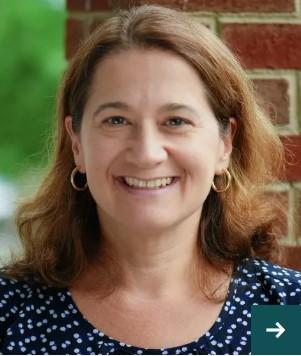
Guests:   Dr. Claudia Jensen, Professor at the University of Southern California and a pediatrician who prescribes marijuana for children with ADD, bipolar, and other medical disorders. 


Brian Epis, who was released from the Terminal Island Prison a couple of weeks ago after serving 2 years of a 10-year sentence for growing marijuana for sick and dying people. 


(Audio Track)  Intro and Poppygate – Glenn Greenway:  Last August, U.S. Defense Secretary Donald Rumsfeld described the U.S./Afghanistan opium boom as “one whale of a tough problem.”  Last week he said a “master plan” was being developed to combat the situation.  Editors from Canada’s Globe and Mail comment that such a plan is long overdue, but it cannot succeed separately from the economic and political reconstruction of the country.  The Pittsburgh Tribune-Review recently noted “it has been reported that October’s presidential election has hindered anti-drug operations as Karzai tries to keep the peace with powerful warlords,” which General Eric T. Olsen, commander of U.S. troops in Afghanistan, stated last Tuesday that “at this point in time, U.S. troops will not be involved in counter-drug or counter-narcotic operations at all – not at all.”  This is Glenn Greenway reporting for the Drug Truth Network.


Dean:  Yeah, this drug war is just quite a success, isn’t it?  I first heard about Dr. Claudia Jensen in a report I saw on MSNBC, and it surprised me.  I think it will shock several of you out there once we get into the details.  This is an interview I did with Dr. Claudia Jensen.


            Dr. Jensen, if you would please, tell the folks a little more about yourself and the work you do.


Dr. Jensen:  OK, well I’m a pediatrician.  I live out in Southern California.  I spent 23 years as a pediatrician with an interest in developmental pediatrics and brain development, and that evolved into an interest into medical marijuana.  So now I am one of about 10 physician-specialists in the state of California who work almost exclusively with medical marijuana patients.


Dean:  Now this is used in many regards, but in particular I heard you had used it for children with ADD.


Dr. Jensen:  Well, that was the rumor that was out in April when I was invited to Congress – to testify in Washington, DC, in Congress.  In fact, at that time I only had 2 patients with ADD, but since the MSNBC and the Fox programs came out, I’ve been inundated with new patients – children especially – with parents complaining about the traditional drugs that their children are being treated with for ADD, and consulting me about using cannabinoids or cannabis compounds to treat their kids.  So now I have a few adolescents and one 8-year-old girl that we are using Marinol, which is a marijuana-based derivative medication.  I don’t usually recommend it for preadolescents because it does affect their long-term development, but in some kids, it is the only thing that is good for them to treat their ADD/ADHD.


Dean:  Now, I spoke last year with a lady out there named Debbie Jeffries whose son had a problem with just violent behavior.  Give us some of the other reasons for which medical marijuana might be prescribed.


Dr. Jensen:  Oh, my gosh, if you look at the list, there are probably 100 different things.  Dr. Todd Mikuriya catalogued what cannabis has been used for historically.  It has been around for about 5,000 years.  It has been used to treat everything from asthma to pain during labor.  It is a particularly good drug for chronic pain, and severe chronic pain patients should routinely be weaned off of narcotics and transitioned over to cannabis because it is so much safer for them than, for example, Vicodin or morphine.  My particular interest is in the brain and how the brain functions, so I see a lot of patients with depression, anxiety, bipolar disorder, attention deficit disorder, insomnia, anger management problems, stress.  All of those things are medical problems that are greatly alleviated by cannabis compounds.


Dean:            Recently, there was a story about a football player, Ricky Williams, who had kind of a stress situation and he indicated that he used marijuana to help alleviate that anxiety.  Could you talk on that regard a little bit more?


Dr. Jensen:  Well, I’m not familiar with the Ricky Williams case, but I am familiar with using cannabis to treat stress and anxiety.  Most people are under the impression that you should not treat stress with cannabis compounds, and I understand the philosophy of that, but on the other hand, stress can kill people.  And I think that cannabis is a very safe and effective drug to relieve stress and anxiety.  As a matter of fact, I have some patients with severe hypertension, and I have them monitor their blood pressures before and after using cannabis.  As a matter of routine, I see patients who have a blood pressure that’s 20 points different before and after smoking marijuana.  I always ask them to pick a time to take it when they are really on the verge of exploding, and then they take a dose of cannabis – usually inhaled, because it works so fast.  And then take their blood pressure 15 minutes later, and they will go from a blood pressure of 180/120 to a blood pressure of 140/95.  So it is a very, very effective stress reducer, and in the case of hypertension particularly, it can be life saving.  So I think that saying it is not appropriate to treat stress with cannabis is foolish.  I think that it is much more appropriate to treat stress with cannabis than to use, for example, a benzodiazepine like Valium or Ativan or Atarax.  Those are all very addictive anxiety-relieving drugs.  Marijuana is not addictive.  It can be stopped at any time.  So I think it is a much safer treatment for stress and anxiety.  And when patients don’t need it, they don’t need to use it.  It has immediate onset of action.  If they take a dose of marijuana – an hour and a half to two hours, it is gone.  So they are not affected 6 to 12 hours like they are when they take Valium or one of the other benzodiazepine drugs.  So it is really, in my opinion, a much better drug for stress and anxiety than what we have available through the pill/pharmaceutical industries.


Dean:  Now, you touched on this earlier, but the fact is, through the use of marijuana, you can alleviate these symptoms we speak of without the side effects, the damage to the liver or the kidneys and so forth.  Please discuss that.


Dr. Jensen:  Well, as I said, there is about 5,000 years of history of using cannabis compounds and to date it is virtually impossible to kill a person with cannabis compounds.  The old joke is:  you have to be shot in an altercation with law enforcement to get killed using cannabis.  There are a couple of studies that suggest that people who use cannabis have had heart attacks, but the truth is that the studies that have documented that were studies on chronic smokers who had heart attacks.  So it is impossible to say that smoking the cannabis caused the heart attacks, because they were people who smoked on a regular basis anyway.  So I don’t really believe that particular study.  It is flawed, and all of the rest of the literature indicates that compared to what we have available, using cannabis as a medication is somewhat like drinking water – if you get water that is tainted, then you have a side effect from it.  The only major problem with cannabis compounds that are inhaled is that there are smoke debris that are deposited in the lungs.  So I prefer for the patients who are going to be smoking their marijuana, that they should use what is called a vaporizer.  A vaporizer is actually a machine that cleans up the smoke out of the drug, and it becomes a mist.  So it does not damage the lungs and, in fact, becomes a very effective treatment for something like asthma or chronic obstructive pulmonary disease.  It is a great drug for lung-related problems.  It’s bad to smoke, but used in an inhaled form with a vaporizer, it is actually more effective than some of the things that we have available now.


Dean:  You speak of the harm from the smoking.  The government is now touring the country sending John Walters out to proclaim that this more potent marijuana, as he calls it, is a danger.  Is that true?


Dr. Jensen:  Absolutely not.  I think that is probably one of the most foolish things I have ever heard.  Of course, what you would like to have is a drug that is very potent so you don’t have to use as much of it.  And if Mr. Walters’ complaint is that marijuana is potent, I think that that is very short sighted, very foolish.  Because, if it is more potent than it was 20 years ago, what that means is that people have to use less than they did 20 years ago to get the same effect.  So I think that is kind of grammar-school thinking, in my opinion.


Dean:  All right, now, we spoke of the fact that as a pediatrician, you deal with certain aspects of treatment, certain conditions.  But as a pediatrician, you treat these children for various and sundry medical conditions, but there are certain aspects where you, perhaps, don’t reach.  Tell us about some of the other studies being conducted for MS, perhaps, or other afflictions.


Dr. Jensen:  Actually, I do see multiple sclerosis patients.  Even though I am trained as a pediatrician, and experienced as a pediatrician, I have a lot of adult patients.  I have one 82-year-old patient, and it is so beautiful how cannabis affects multiple sclerosis.  There is a book by a gentleman named Lester Grinspoon.  He is a professor of psychiatry at Harvard and he wrote a really beautiful book called Marijuana, the Forbidden Medicine, and there is a chapter in that book that I have Xeroxed to give to my new multiple sclerosis patients – because he shows how cannabis is really the only effective medication to reverse the effects of multiple sclerosis.  I had a patient in here the other day, who had never used marijuana, with advanced multiple sclerosis.  He came in with his wife and he was very debilitated, couldn’t walk, had to come in with a wheelchair.  I spent an hour talking with them about cannabis compounds, and I got a phone call from his wife about 10 days later.  It was just a beautiful, beautiful call about how he was able to walk again.  I think with multiple sclerosis I get goose bumps when I think about what has happened with some of those patients because it is so effective and very helpful for MS patients.  They actually get some recovery of function, and the beauty of cannabis is that the side effect is euphoria.  So not only do they get recovery of function, but they actually feel happier.  So it is a very beautiful medication for MS, particularly.


Dean:  I don’t know about you, but I feel somewhat euphoric just hearing these words from Dr. Claudia Jensen.  We’re going to take a little break, and we will be right back.


(Audio Track) – “Name That Drug!”


Dean:  It’s time to play “Name That Drug With It’s Side Effects”:  Severe depression, cancer of the breast, stroke, dementia, blood clots in the lung, prolonged bleeding, high blood pressure, heart attacks, and congestive heart failure.  Time’s up.  The answer:  PremPro, a combination hormone replacement approved by the FDA.


(Audio Track) – MPP promo


Dean:  Today we are visiting with Dr. Claudia Jensen, a professor at USC and a pediatrician in Southern California.  John Walters tours the country saying there is a no medical association that supports marijuana.  He proclaims that, sure people feel better after smoking a joint, but they feel better if they had a shot of whiskey or a hit of heroin.  Yet, I have seen these MS patients – shaky hands, basically unable to talk, and after a couple of hits, they use their hands while they are talking, they are able to smile as you say.  And for him to say there is no legitimate use for MS patients is such a sham.


Dr. Jensen:  I think it is very clear that Mr. Walters has not read any of the medical literature and that he ignores what even the Federal government has written on cannabis.  The National Institutes of Health published a report clearly indicating that there are medical uses for marijuana.  So not only is Mr. Walters ignorant of the medical literature, but he is failing to listen to and attend to his own advisors.  It is clear that Mr. Walters has an agenda that has nothing to do with health care for people in the United States.  It is an agenda that has nothing to do with compassion or concern for the well being of the American citizens.  I don’t give him much credence when he talks about cannabis or marijuana because he is clearly undereducated.  He has not looked at the medical literature.


Dean:  Many of the listeners outside of your home state of California are dealing with situations where the legislatures or their local medical boards are reluctant or very slow to make any moves.  Yet here in Texas, they did a study that showed that they wanted to make doctors and patients able to freely discuss marijuana’s use and to conduct more studies.  What would you say to these doctors in these other states?


Dr. Jensen:  Well, I think it is hard as a physician to take on a whole new field of medicine.  I think that they should consult with their colleagues who have more experience working with cannabis and treating patients, but the bottom line is that this is a truth-based issue.  If the physicians care enough about their patients that they are willing to do a little work, then I would suggest that they actually start researching some of the data that has been published and some of the studies that have been published.  Medical boards and legislators and legislatures and lay people can inform themselves by actually reading the published truth.  That is all the physicians have to do is read what has been published, and they will become better educated and then they won’t have the same biases and prejudices that they have had in the past.


Dean:  Given that there have been some problems along the way – I think the California medical board went after Dr. Todd Mikuriya  – but things are settling out.  In fact, I read a study that showed there has been no increase in medical marijuana use by adolescents following the passage of Prop 215.  Talk on that, if you will.


Dr. Jensen:   OK, what I know about marijuana usage in adolescents is that since the Drug Abuse Resistance Education program has started, the incidences of using marijuana in junior high and middle schools have gone up, significantly so.  So I think that using a system that tries to invoke fear in adolescents doesn’t work.  And the truth is that with the passage of the Compassionate Use Act, now people are getting a little more information about what we know is factual rather than fear based.  So it is only – I would expect as people become more educated and they focus more on the truth about marijuana, that children will understand that this is a medication and that it should be used by sick people.  And they are going to be less likely to want to use it recreationally if they understand that it is a medication for sick people.  So I would not be surprised at all to find out that the use of cannabis has gone down in middle schools or is the same with the passage of the Compassionate Use Act.


Dean:  OK, Dr. Jensen, did you have a couple of points that you would like to bring forward?


Dr. Jensen:  Yes, I do have some things to say.  Number one, I think that it behooves every American citizen to become educated.  We should focus on what is truthful and factual and not what is fear based or hearsay, so I would ask any American citizen who has heard bad things about marijuana to actually start looking at the medical literature and become better educated.  I see this as an issue of patient advocacy.  There are a lot of sick people, and there are a lot of American citizens with medical illnesses who are hurt and suffering, and in my opinion it is un-Christian … It is immoral to deprive these patients of an opportunity to be able to have any medication that would help them.  Particularly if that medication is a medication that will not harm them, or at least the harm/benefit ratio is very, very low.  The benefit so outweighs the potential harm.  I think we all should become more educated, because the biggest problem for marijuana users is the way that people feel about it.  I think that Americans should become better educated to try to adjust the way they feel about the drug, because it is a very, very good medication and it is immoral to deprive people who are sick.  There is one other thing that I would like to add, and that is why I started seeing medical marijuana patients.  Because, as a physician, it is very risky for me to stick my neck out.  There are social reasons why I should not take care of medical marijuana patients – social and political and legal reasons.  But this is an issue of patient advocacy, as I said.  And patients right now are buying marijuana illegally.  Congressman Mark Suder stated in his web site that American people spend almost $11 billion a year annually, illegally feeding the black market and buying marijuana from criminals.  I don’t like the idea of American people giving their money to criminals to buy medicine, and I think that the only chance that we have is to bring this up out of the criminal market and have marijuana be able to be grown and sold legally through cooperatives or, even better, through the Department of Public Health so that the government can get the money.  But I think that what is happening now is that there is a war going on and people who are growing marijuana legally are being punished and that drives patients back down into the black market to give their money to drug dealers rather than be able to buy their marijuana from farmers as medication.  So I highly object to that.  That’s one of the major reasons why I am vocal about my opinions, because I think that we should be buying and selling marijuana through the Department of Public Health and the government should be growing and policing the use of cannabinoids for patients, and to penalize a farmer for being able to provide good quality medication is wrong.


Dean:  I want to thank Dr. Claudia Jensen for that fine interview.  I mentioned earlier that Brian Epis was recently released from Terminal Island Prison for growing marijuana for sick and dying people.  Here is part of an interview I did with him.


Dean:  John Walters was in my hometown of Houston a couple of weeks ago and he told me that less than one-half of 1 percent of those people in prison are there for marijuana.  What is your take on that, in so far as what you saw in the Terminal Island Facility?


Brian:  Well, that’s not true.  There is a substantial amount of people in there for marijuana, but if he means for medicinal marijuana – then that would be true, less than one-half of 1 percent.  So far they are just basically picking off certain people, so they have only gotten about – I’m not sure exactly how many, but – definitely, there are a hundred times more people in there for a regular marijuana offense rather than a medical marijuana offense.


Dean:  Brian Epis, would you tell us what do you foresee in the future here?  How is the battle going to be fought in California, and what part will you be taking in that?


Brian:  Well, the Supreme Court in about 10 months is going to uphold the Reich decision.  They are going to affirm the decision in the 9th Circuit of Appeals and that will be a substantial victory for state’s rights and for the rights of medicinal marijuana patients and care givers.


Dean:  It is certainly good to know that Brian Epis is back home with family and friends and in the arms of his 11-year-old daughter who missed him so much during these 2 years, and we wish him well and we hope the Supreme Court is able to keep their heads securely out of their posteriors.  It is my hope that you will do something to help end this insane policy of drug prohibition.  One of the first things I would invite you to do is to visit my web site, cultural-baggage.com and click the link to send you to the Declaration of Evident Truth.  I have well over a hundred signatures there on line and about 800 handwritten signatures in support of this document, which basically says man’s laws against cannabis are bigoted, corrupt, and a violation of our civil rights and that we choose to go another direction, one dictated by common sense and logic.  Again, you can sign that by visiting cultural-baggage.com.  You know, I grew up believing in an America that had compassion, intelligence, understanding, and that offered not second chances, but infinite chances.  Yet if my vision of America is flawed – if the likes of John Walters, our illustrious drug czar can stand as knowledgeable and credible and spill his soliloquies forever – then the America I dreamed of is lost.  But I know better than that.  I know that you, the listeners, will help to make the difference.  If any of you affiliates would like some promotional work done in your area to help with pledge drives or for other purposes, please let me know.  Please send an email to dean@drugtruth.net.


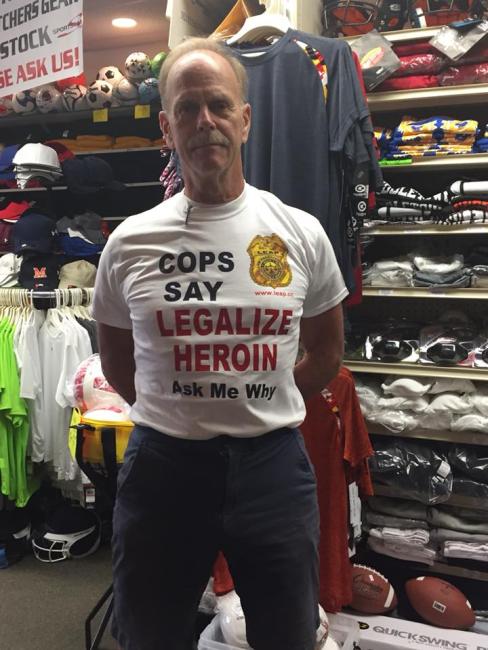
            On next week’s Cultural Baggage show, we will have live in the studio our guest, former police officer Howard Wooldridge, a very active member of Law Enforcement Against Prohibition.


Dean:  Law Enforcement Against Prohibition is not just for medical marijuana or marijuana in general.  You guys are for ending all prohibition, is that right?


Howard:  That’s correct.  We know from our time in the trenches, going on midnight raids, arresting person after person for drug use or drug sale, that we are not doing anything better than simply forcing society to build more prisons for more drug users and drug sellers – having no effect excepting taking money away from our education system, our health care system, and increasing death, increasing crime.  All police officers know this.  It is just a lot easier when you are retired to speak the truth.


Dean            Another program note – starting on Wednesday, August 25, we will have not only this program but several Unvarnished Truth half-hour programs on line as well, featuring guests that include Marc Emory, Judge Eleanor Schockett, Warden Richard Watkins, and about a dozen more.  Time is up, so I must remind you – because of drug prohibition, you don’t know what is in that bag.  Please be careful.


(Audio track)  Ending.